25 October 2012

Earthdawn: Part 15 - Creature Trophies 1

This is the fifteenth part in an ongoing series about Earthdawn. Introduction and Index.

This article is a compilation of three crafts projects from Adventure Logs detailing the construction of three different trophies as game aids. Covered here are lightning lizard eyes, crackbill necks and earth q'wril beaks. If you have been keeping up with the Adventure Logs, there isn't much to see here. If you have given them a pass, there may be something here of interest.

I have mentioned previously that I like to run tactile games, and this is where I introduced that aspect. A common feature of creatures in Earthdawn is that parts of them are valuable and can be harvested and sold. Writing things down on a character sheet is fine for bookkeeping, but it isn't very visceral. So I made some lightning lizard eyes using some glass beads that were clear with a blue iris. Initially I tried to etch them with an etching cream - it did not turn out so well. That plan will require a sand etcher to work how I intended and that is more of an investment than I wanted to make, even with a 40% off coupon at Michael's. Employing a silver marker produced the almost final result.

They were very popular, in fact more popular than I had imagined. Two things came from that development. First, the players didn't want to give all of them up; they wanted to keep some of their treasures. Second, the silver markings were rubbing off from excessive handling. The second issue was resolved with some matte sealant. I didn't want to take the loot away from the players, but I did want to give them the rewards they had earned. To solve this, I created a house rule about decorating loot. This allowed them to receive the Legend Points (and more), expend money, use artisan skills, and keep their toys. It was a win for everyone. The difficulties of the tests as the value of loot increased was still being ironed out, but it is fun and that is what this is all about.

Crackbill necks were simple to put together and turned out well in the end. I got a cheap, nylon (this is important) jump rope and cut it into sections, around 20 cm; they had to be short enough to fit into the boxes. Using a lighter, I melted each end. This fused it, making it sturdier and lending a nice cartilaginous feel. Then some bronze paint was applied. The end result was rough and textured, but still flexible.

Earth q'wril beaks were significantly more time consuming. The base uses glass paper weights from the craft store. I applied masking tape to the tip of each glass bauble, to create the illusion of where the earth q'wril secretes fluid to break rocks apart in the final product. Next some white primer was applied and allowed to dry. This was followed by black matte primer that was applied in a thin layer. When dried, I remove the masking tape and layered clear matte sealant over them. This protected the paint and gave a more worn feeling, particularly to the tip, while the base was left as smooth glass - showing where it had been removed from the creature. The end result has some layers, uneven parts and roughness that make it feel more natural. They can also stand up to some handling, which is a bonus.

23 October 2012

Earthdawn: Anatomy of a Discipline 03 - The Swordmaster

This is the third Anatomy of a Discipline in an ongoing series about Earthdawn. Introduction and Index.

Overview

The Swordmaster is probably the single most popular Discipline in Earthdawn. I have never run in a campaign that did not include at least one (my current game has two). What isn't to like about them? They are flashy, useful in combat, flashy, useful in social situations, flashy, and a perfect fit for t'skrang (who are very flashy). The downside is that they are mechanically complex, requiring patience and timing to get the most out of, and are focused on tying up one foe rather than dealing with hordes of mooks. This strange dichotomy can be at odds with what many players are looking for in the Swordmaster.

Swordmasters are equal parts social and combat Discipline (barring Specialists) and are truly at home in both arenas. To be successful as a Swordmaster, you must engage in both. As a Discipline, they are rather obsessed with rankings, formal or informal, and competition in general. Tournaments are common affairs and no Swordmaster can resist the chance to show off their techniques and brag talk about their exploits. Many other Disciplines will look down on this, but it is through this process that they engage with their fellow adepts and their Discipline. Those that are successful will attract successful students and the notice of powerful mentors, while those that are unsuccessful will find their careers stagnant. In this way, the Swordmaster is always evolving to remain competitive.

While it is easy to find a Novice instructor that will train you, once you become a Journeyman, you will have to convince them it is worth their time. You will have to prove that you are worthy of their tutelage, which means that your philosophies should be similar to theirs, or at least intrigue them (so that they can show you the folly of your ways). For a Discipline that is somewhat individualistic, this means that you cannot stray too far out of the box. After all, someone had to Initiate you, which means their teachings and philosophy became and intrinsic part of who you are, as will the lessons of all the future instructors that train you. What this means is that a Swordmaster is still an archetype, in essence, and you cannot stray too far from that archetype before you are no longer portraying it.

When making a Swordmaster, your weapon is an important consideration. To a Swordmaster it is more than just a tool, it is an extension of their Discipline and who they are. It should reflect something about them. There is an optional rule regarding the "soul sword", the weapon which perfectly matches their inner self. As with all Disciplines, the particular philosophy the Swordmaster subscribes to will be important. It is a Discipline about adventure, excitement and romance - living life to the fullest and leaving something behind to let everyone that follows know you were there. Towards this end, the relationships that a Swordmaster establishes will be important to them. Who Initiated you and how is your perspective different than theirs? What was their personal style and how have you adapted it? What were their rivalries; which will you carry on and which will haunt you? What is your trademark that everyone will come to know you by? These are some things to consider when making a Swordmaster.

Discipline Violations

These are best employed not as a stick, but as a chance for the player to take a deeper look at what it means to follow their Discipline. Swordmasters are incapable of ever doing anything the easy way. The shortest point is also the least interesting point - there is nothing notable about the man that walked to Throal on the safe merchant road, but if they traversed troll-capped peaks and stole aboard a drakkar to get there, now we're talking. This means they should always choose flair over plain and complicated over simple. They exist to make everyone's lives more difficult and more exciting. Their plans should always be overly ambitious, fraught with opportunity to go horribly wrong, but just as likely to snatch victory from the jaws of defeat.

Like most of the combat Disciplines, the Swordmaster has something of a code of conduct that helps to prevent them from immediately descending to the lowest common denominator in a conflict. They are as incapable of missing an opportunity for a flourish or insult as they are of cold blooded murder. There is no art or beauty in a knife in the back, and everyone deserves a chance to fight back (it will never be fair, however, not against you). No conflict should ever be boring; that is the gravest insult - they are dying for your art, give them one last, masterful performance to send them off to Death's kingdom.

In many ways, their Discipline Violations are a different nature than most others. They tend to be less introspective than most, but that does not prevent from taking an opportunity to do so. Show the consequences of this carefree attitude and how it can affect others. Swordmasters are adrenaline addicts and they, quite literally, cannot help it - it is who they are. It is all fun and games until someone gets seriously hurt. Earthdawn is a setting of high fantasy and high action, but also of Horror and harsh realities. No other Discipline has the opportunities to have those realities crash down on them quite like the Swordmaster. Be warned, use this sparingly or it will deform the character.

Specialists

There are three Swordmaster specialists, Bladesman, Gallant and Slasher, and what should be considered a sub-specialist, the optional two-handed Swordmaster. The Bladesman focuses on combat, while the Gallant emphasizes the social aspects of the Discipline, while the Slasher becomes something more brutal.

For Bladesmen, the Acrobatic Strike Talent becomes a 1st Circle Discipline Talent, while Taunt becomes an Initiate Talent Option. Physical defense bonuses are gained at Circles where social defense bonuses would normally be gained, and vice versa. Between Acrobatic Strike and a good physical defense (which Acrobatic Strike will only improve), the obvious strength of the Bladesman is that they have significantly more defense in combat. The downside is that their single target potential is diminished (effective loss of Taunt), and they will not be quite the social character they were previously.Indeed, the entire demeanor of the Bladesman is more somber (though this may not be saying much) and dedicated to their weapon. The Troubadour is always a thematically popular Discipline combination for Swordmaster, but there is perhaps too much overlap between the Disciplines to make the cost worth it; the Bladesman, however, makes an excellent compliment to Troubadour and allows the Swordmaster to explore some interesting territory by combining the two ethos.

The Gallant exchanges First Impression and Maneuver, making the former a 1st Circle Discipline Talent and the latter an Initiate Talent Option. This happens for Winning Smile and Heartening Laugh, and Lasting Impression and Disarm as well: each Talent Option becoming the Discipline Talent at the associated Circle (2 and 6) and the Discipline Talent becoming a Talent Option for the appropriate tier (Novice and Journeyman). The Gallant Swordmaster goes the other direction from the Bladesman, becoming a hybrid combat and social adept. For most Groups this is a very useful character, bringing both strong combat and social options with reduced combat complexity. Their combat options are significantly reduced, as is their emphasis on a single opponent.

A Slasher replaces Maneuver with Close-In as a 1st Circle Discipline Talent, while Maneuver becomes a Novice Talent Option and Winning Smile is removed. The 7th Circle ability to spend Karma on all melee damage rolls is replaced with one to spend Karma on any melee or thrown damage roll with weapons smaller than the one-handed size limit. The Slasher is an interesting take on the Swordmaster; they use small weapons and delight in a brutal and personal fighting style. The change in Discipline Talents makes them more aggressive and less patient; they get a pay off for Close In immediately, though it is over all lesser. I was not a fan of Close In for Windmasters, but I think this is a good option for a Swordmaster, particularly a windling (though the loss of a social Talent is more keenly felt by them). Swordmasters only have access to one Talent that boosts damage, Surprise Strike, which is best used in conjunction with Conceal Object. Given Swordmaster's limited damage potential, especially windlings, there can be rewards for exploring this option.

Two-handed Swordmasters are an optional rule for any Swordmaster that uses larger weapons. The Talents Second Weapon and Lion Heart switch positions. This option is fairly uncommon and frowned upon by many Swordmasters as they feel it shows a weakness in technique to place so much emphasis on a large and flashy weapon.

Talents

Initiate
Talent Options: Acrobatic Strike, Avoid Blow, First Impression, Speak Language, Wound Balance

First Circle
Discipline Talents: Karma Ritual, Maneuver, Melee Weapons, Parry, Taunt

Novice
Talent Options: Anticipate Blow, Detect Weapon, Haggle, Sprint, Throwing Weapons, Unarmed Combat, Winning Smile

Second Circle
Discipline Talent: Durability (7/6), Heartening Laugh

Third Circle
Discipline Talent: Riposte

Fourth Circle
Discipline Talent: Thread Weaving [Weapon Weaving]

Journeyman
Talent Options: Conceal Object, Etiquette, Graceful Exit, Lasting Impression, Lion Heart, Surprise Strike, Swift Kick, Tiger Spring

Fifth Circle
Discipline Talent: Second Weapon

Sixth Circle
Discipline Talent: Disarm

Seventh Circle
Discipline Talent: Resist Taunt

Eighth Circle
Discipline Talent: Second Attack

On the whole, the Swordmaster is a patient and defensive combatant. They are focused on engaging a single, powerful opponent and setting themselves up for a powerful offensive. Maneuver forms the backbone of the patient offense, with Taunt as a debuff whose use cannot be understated. Second Weapon and Second Attack provide the additional offense, but cannot capitalize on the opening created by Manevuer (it only affects the first attack), while Parry and Riposte are the active defenses to ensure the opening happens. Riposte is at its most useful when used against a mook to effectively gain an additional attack. Never forget to spend Karma with your active defenses (Parry and Riposte); if you are being hit, the odds are good you will need to roll well to avoid the attack and managing damage will always be a thing for the under armored Swordmaster.

Between Disarm and their 5th Circle ability, Flourish, Swordmasters can deal with nearly any opponent in one-on-one melee combat and have the capability to control the tempo of the fight and make certain it occurs on their terms. The Swordmaster, despite what the Discipline seems, is a very deliberate fighter. They don't have the raw damage and toughness of the Sky Raider or Warrior. They have to rely on a big bag of complicated tricks. At most Circles you get one new trick and that is a good chance to figure out how it works in your overall strategy.

The Initiate Talent Options for Swordmasters have some very good selections:
  • Acrobatic Strike - This is a good selection for most Disciplines if they are willing to continually improve it and have a good initiative. I'm of the opinion that Anticipate Blow is a better option for Swordmasters.
  • Avoid Blow - Largely redundant with Parry.
  • First Impression - One of the biggest strengths of the Swordmaster is how it brings excellent access to social Talents.
  • Speak Language - Low investment requirements and can be crucial to the plot, particularly in the hands of a social character like the Swordmaster. That being said, there are so many good options, check to see how important this will be for you to have. The skill is more-or-less just as good.
  • Wound Balance - Swordmasters tend to have low strength, low toughness and low armor meaning that taking Wounds and getting knocked down from that should always be a concern. The required investment is minimal and there can be considerable payoff.
Luckily (?) the choices from Novice aren't nearly as difficult in Initiate, which means you can revisit the Initiate Talent Options that were not previously selected:
  • Anticipate Blow - This Talent will add to the Swordmaster's complexity (see Warrior for a thorough discussion), but also has synergy with their patient fighting style. It does require continual improvement and a good initiative.
  • Detect Weapon - With so many other options, unless this is for a concept, I would give it a pass and leave it to a more paranoid Discipline - there is bound to be one.
  • Haggle - Somewhat similar to Detect Weapon, only replace paranoid with greedy/bean counting.
  • Sprint - At the cost of a Karma, this can get expensive, though the investment requirements are low.
  • Throwing Weapons - Normally a pass, though the Slasher Specialist can get significant benefits from this Talent.
  • Unarmed Combat - Similar to Throwing Weapons, except for t'skrang who can use tail combat.
  • Winning Smile - Another good social Talent for use with those attracted to the Swordmaster.
Journeyman holds a number of good choices and by now there may be some hard choices on what gets left behind:
  • Conceal Object - Not easy to pull off, as most Swordmasters will be using weapons at the limit of their one-handed size limit at this point. It does combine with their only native way to improve damage, Surprise Strike.
  • Etiquette - Yet another good social Talent. If you are playing a highly social Swordmaster, you will want all of these social Talents.
  • Graceful Exit - I don't think I have ever seen anyone ever use this Talent. Perhaps if it let the entire Group escape, but only the character using it. That being said, it could be a life saver.
  • Lasting Impression - With access to both Etiquette and Lasting Impression, the question becomes "which to get first?" It isn't easy to answer and depends on how things have been going. Etiquette will help establish a relationship, particularly in new situations, while Lasting Impression will help retain a relationship. It depends on which if the two has been proving more difficult.
  • Lion Heart - Low investment and always useful, though it does not stack with Resist Taunt.
  • Surprise Strike - Truly useful for the Slasher Specialist in combination with Conceal Object. Otherwise very difficult to use consistently.
  • Swift Kick - This requires constant investment and a higher initiative with a low damage pay off. Against an opponent that has been out maneuvered, however, this can be very useful. T'skrang deserve a special mention here: their tail can be used instead for Swift Kick.
  • Tiger Spring - The only initiative booster that Swordmasters gain access. This is often considered a must, and will aid in the usage of Talent Options that require a higher initiative (Acrobatic Strike, Anticipate Blow and Swift Kick).
Races

Some races fit the iconic mold of the Swordmaster more easily than others, namely the elf, t'skrang and windling. Humans lend themselves to any Discipline handily and can easily mitigate and weaknesses and capitalize on any strengths through Versatility - Swordmaster with Air Dance, Great Leap and Down Strike? Run! Others may have a slightly more difficult time of it, though ork and troll Swordmasters are well served by the Bladesman Specialist, and the Obsidiman as curious success there as well. Their natural armor combined with fernweave grants excellent protection with no initiative penalties and their strength and toughness make up for other areas Swordmasters traditionally have deficiencies.

T'skrang and windlings deserve their own section, though for different reasons. A t'skrang has the ability to capitalize on a number of the Talents available to Swordmasters in ways that other races cannot through their tail - it can be used for Second Weapon and Swift Kick, which can open up some interesting offensive avenues. Windlings have issues because of their size. The limitations on the weapons and reduced damage means that they will always be fighting an uphill battle on actually hurting anyone. This means a windlings Swordmaster will have to squeeze ever bonus to hit they can get in hopes of achieving an armor-defeating hit (through Maneuver or Close In), or go the direction of emphasizing the social aspects of the Discipline through the Gallant Specialist and work more as a support character in combat.


Equipment
The importance of choosing the right weapon was already discussed above; a weapon right at the one-handed size limit is pretty typical. It is worth mentioning that despite the name, Swordmasters do not have to use swords, those just happen to be the most common selection. Worth special mention here are the t'skrang flowing blades. They are (perhaps tragically) better than any other size 3 weapon, particularly for Swordmasters. You grant a penalty (Harried) to your opponent if you successfully use Maneuver them while wielding a flowing blade.

Most Swordmasters choose light armor to minimize initiative penalties, often sporting a light shield during Novice until they gain the Second Weapon Talent. An interesting thing about Swordmasters is that there is no Discipline Talent which requires them to wear light armor and only three Talents Options which actively benefit from it. Thought uncommon, there is little reason for a Swordmaster to not wear crystal plate and be the shiniest thing ever.

All of this falls by the wayside to a strong concept, of course. In the grand scheme of things, the bonuses and strategies that this post discusses are relatively insignificant.

20 October 2012

School Daze

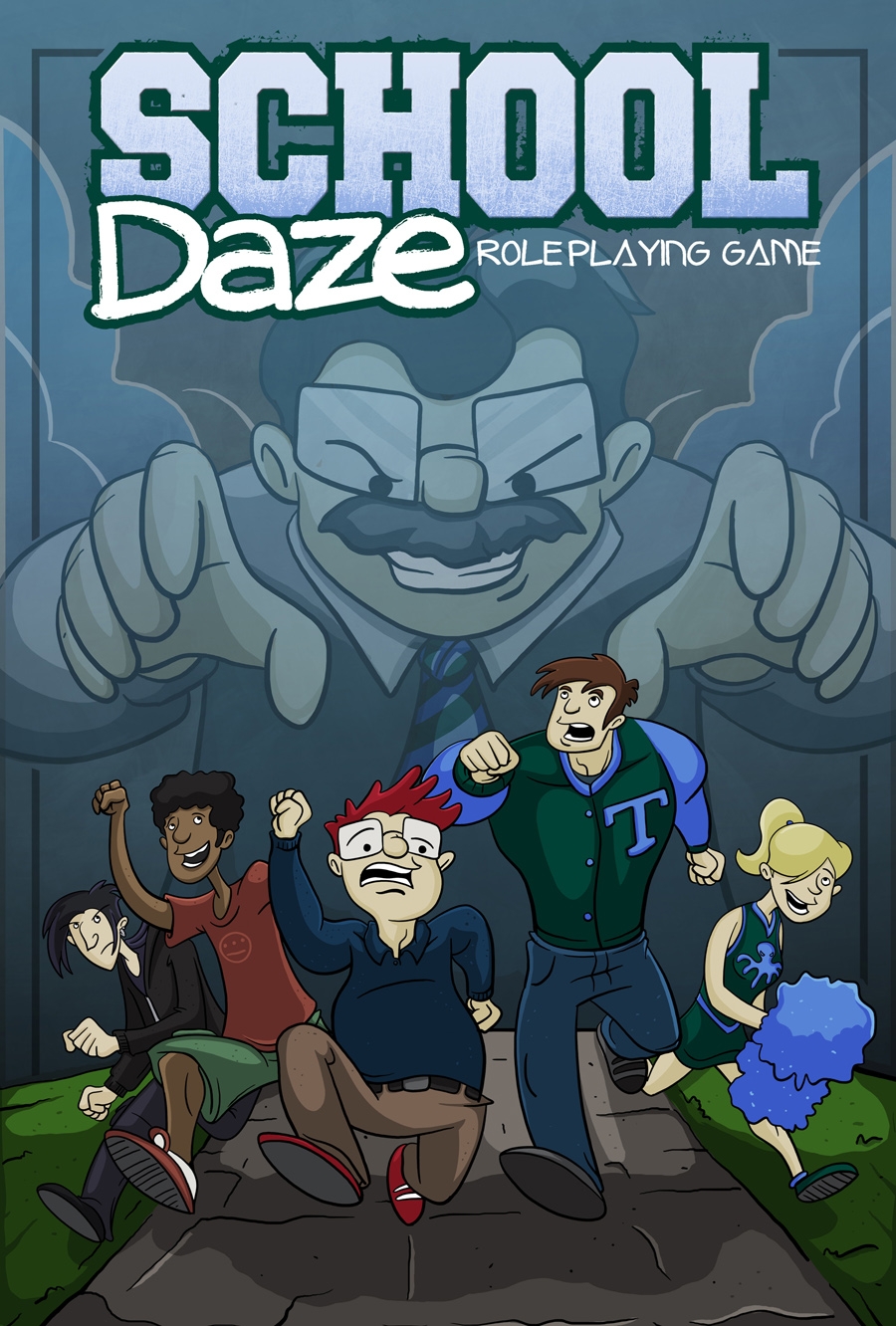
In School Daze, by Tracy Barnett of Sand and Steam Productions, you play a high school kid that is going to be (inevitably) involved in some kind of trouble, from which hijinks will ensure (probably hilarity as well). This is to say, School Daze sets out to emulate the high school genre. I got in on the Kickstarter project and recently ran a one-shot playtest.

School Daze is a game that can be picked up with minimal prep and get started. The system is simple and easy to understand: you roll a d6 and apply some modifiers, if it is 5+ you succeed, if not then you fail. The modifiers come in only a handful of flavors, so few in fact that I will list them all: Favorite subject, ranks, consequences and gold stars. None of these individually get over +2 or -2; the system is a breeze and will quickly become unobtrusive. There is enough "mechanics" to it that it isn't completely blase, but players that like to interact with the mechanics in a more significant fashion (such as FATE), will probably want to look elsewhere.

The favorite subject is the class in school which the character excels in, granting a significant bonus. Ranks are character traits, which can be good or bad depending on the circumstance, and are selected from a list. Consequences are gained from failed rolls and represent a penalty that will follow the character around for an appropriate amount of time. They come in mental, physical and social and have a significant penalty associate with them. Gold stars are the currency that players earn and can affect the game, spending them for a bonus, to eliminate a consequence, or to directly affect the story in some way. Each player starts with one and can have no more than three at any time.

All of these elements are easy to deal with and understand. For the particular setting I ran (a magical high school), the favorite subject was changed to magical talent, which meant that the players had considerably more power and were able to do quite a bit. Consequently, I scaled back on the gold stars and didn't hand any out; creative usage of magical talents meant they were throwing around large bonuses on a regular basis and things would have gotten out of hand with access to even more gold stars. That being said, the magical talents were a hit and gave considerable latitude in how to use them. In contrast, a favorite subject could be of limited use (such as French). Consequences were fun and always the result of a failed action on a character's part.

Ranks are easily the weakest part of this setup. The basic premise is largely sound, a trait that will provide a bonus in one circumstance and a penalty in another. It is the execution that has issues. A list is provided which is simultaneously helpful and hindering for the same reasons: it is limiting. The limits help move things along quickly, but also can stifle what a player is after. While it may be silly, it is the naming system of the ranks that, well, rankles me: they all end in -ank, no matter how strange it may be, which also lends itself to some bizarre inclusions. For example, plank, Shawshank, skank and stank all make appearances. Plank means that you are up on internet memes, but not on real life; Shawshank that you know about movies, but are regarded as a flaky thespian; skank means you are attractive, but people think you are a slut; and stank means you stink - hypothetically there is an upside to this in that people will leave when you want. This feels like something that started as a joke and didn't have the common decency to remain a joke. It is entirely possible that I am the outlier in this, and I will fully accept that. Some of the ranks are difficult to assess when to apply penalties, and others seem more suited to enforcing a particular kind of behavior when inconvenient rather than assessing a penalty. It is a fine idea and it worked in game, just one that could use some more polish.

The framework for a session is a Group Project, essentially the adventure, and there is plenty of room for player input into the what that will be (if that is your thing). The basic structure is a theme, npcs and a time frame. The book also provides a handy chart to randomly determine a broad theme if you are having difficulties or want to trust in the fates. Results from that table include "Intramural Kickball Championship", "Big Party", and "Alien Invasion". Included in School Daze is the setting of Trowbridge High, which has a lot of blank spaces. Mostly it is a collection of NPCs ripe to be plucked and used in any game. There are also four alternate settings, a Buffy-like setting, Harry Potter, wild west, and science fiction.

The biggest strengths of this gamae are the simplicity of the system and the tone of the writing. It helps to put you in the mind for wacky high school adventures and give tips to get you there. One of the biggest tips is right at the beginning: always making failure interesting. Failure should be just as fun as success and continue to move the story forward. This is great advice for any game, but particularly one like this where you cannot rest on the mechanics to drive the narrative. The story requires significantly more investment to keep things moving forward without as much system support.

In all, this is a cute game that has a simple mechanic and a nice framework, with good GMing advice and ideas for the genre. It is fast to play and easy to pick-up.

Actual Play

The one-shot that I ran was a riff on the Harry Potter alternate setting, a boarding school with magic: The Apollyon Academy for Warlocks and Witches. The players were provided with some in-depth background to make characters with, but it isn't particularly relevant here. The theme was "Homecoming", which involved midterms, the big Homecoming spellball game (against their rivals, the Midian Academy Monsters) and the subsequent dance. The primary NPC was school heartthrob and spellball ace Jacob Ryan, he had recently broken up with his steady for unknown reasons and was at the center of the unfolding events, the other NPCs I provided were Ms. Victoria, adviser to the PCs "secret society" and Heritage instructor (teaching all the skills that warlocks and witches of good breeding need to maintain the status quo and keep everyone else down), Molly Kranzvald, a poor ginger that would like nothing more than for Jacob Ryan to notice her, and two spellball players from the rival school, Jake "Paint Them" Black and Teddy "Cull Them" Tepes. The time frame for these events was a week, but the emphasis was on the first day, to set the stage and the last day of the week.

For this setup, each character needed a motivation and three relationships. The motivation should be specific to the Group Project and show how they are invested in it. The relationships provided were the bulk of the NPCs used and helped to fill things out while giving the players a stake in the events by filling in details for me with some subtle encouragement. The general technique of having players create three NPCs is one that I have been using in high school genre games for years to great success. That being said, being a one-shot mean that not all relationships were used. The details of the session are a broad overview of the events. Here is the cast of characters (relationships that never came up have been omitted):

Cassandra Valentine
Magical Talent: Potions
Ranks: Bank, frank and swank
Motivation: Make Homecoming go as planned.
Relationships: Connor, cute boy she likes; Ellie, scatterbrained minion; and Mary, flirt and rival politician.

Eva
Magical Talent: Illusions
Ranks: Bank, Shawshank and swank
Motivation: Be the center of attention.
Relationships: Jessica, theater rival; and Matthew, ex-boyfriend.

Jason
Magical Talent: Thymomancy (emotion magic)
Ranks: Bank, skank and swank
Motivation: Hook up with Jacob Ryan
Relationships: Patrick Picard, dean and friend of the family; Joseph, rival and all-around good guy; and Miranda, BFF.

Lizza Blaze
Magical Talent: Telekinesis
Ranks: Clank, lank and rank.
Motivation: Win the Homecoming game!
Relationships: Edith Newton, spellball coach and friend of the family; and Vince Jackson, old enemy.

Viktor
Magical Talent: Necromancy
Ranks: Bank, dank and skank
Motivation: To keep the dance "real".
Relationships: Vicky, his not quite girlfriend.

At the start of Homecoming week, the biggest question on everyone mind is, "Who is Jacob Ryan going to the Homecoming dance with?" The captain of the spellball team had just broken up with his long term significant other for uncertain reasons. All that is know is that he doesn't have a date, is beautiful and athletic, genuinely nice and genial, and not very bright. The Eldritch Society, a group of warlocks and witches from powerful families that wield considerable influence within the school, have decided that one of their number, Jason (who has something of a reputation), will be attending with Jacob Ryan no matter what the cost. Also that the Apollyon Kraken will crush the Midian Monsters and the dance will be a fantastic success... a no matter what the cost.

The characters determined what their classes were and how much attention they were paying in them (this became relevant when it came time for testing at the end of the week), though by not paying attention they were allowed to pursue their social agendas. Rivalries and opposing agendas surfaced early, with Mary making a play for control of the dance by suggesting a better theme than Cassandra (a masquerade when the veil between the worlds is thin so you cannot tell if you are dancing with a student or a ghost; Cassandra would later admit that she loved this idea, but it had to die for that very reason - it too good and it wasn't hers) and Jessica shutting out Eva for control over the Homecoming dance routine.

It did not take long for the magic and unintended consequences to begin flying. Mary has repeatedly hit with ennui incantations intended for rival suitors of Jacob Ryan, while Viktor didn't keep it "real" enough and a failed test had Vicky showing too much interest in Jacob Ryan instead of going to the dance with him. The fight to gain the attention of the oblivious Jacob Ryan was brutal and often went sideways with magic gone awry. Molly was another unfortunately victim, though of the passion instead of ennui flavor. Things went well for her, for the most part; it was Jason that did not care for the results.

During the week, the power plays continued. Cassandra destroyed Mary's move at gaining control and in retaliation Mary arranged for Connor to go to the dance with Eva, while Mary herself removed Eva's back up, Matthew; creating a situation where no one would get what they want. Despite this, unintentional spells continued to haunt Mary the fate caster. Eva publicly humiliated Jessica and sent her to the wings, but was trapped attending with Connor since she could never be seen going stag.

Lizza studied and practiced hard, being on a scholarship isn't easy, and managed to find solace in a burgeoning relationship with Joseph that was initially formed to distract him from pursuing Jacob Ryan to spite Jason. Viktor plotted the downfall of Jacob Ryan with some effort, but little follow through, and was embarrassed terribly by summoning the spirit of his family matriarch who reminded him to change his underwear. In the middle of class. He also did some research on suspicious happenings after being confronted by a tortured spirit, slowly being devoured from within, that he could stop the cycle. Meanwhile Jason continued to fight with the other lobsters in the bucket until finally Ms. Victoria swooped in at the eleventh hour to mysteriously took Jacob Ryan away.

On the final day, things came to a head. Eva had a confrontation with Mary before class which went very poorly and ended with Mary giving her a bitingly cold kiss, searing her skin and stealing her life. It wasn't long after that when Cassandra found Mary's body, after a ritual suicide in the chamber of student government. Between midterms, the characters gathered and attempted to figure out what happened. Jason exposed himself to her final thoughts and feelings that saturated the room, knowing beyond a doubt it was his actions that drove her to placing a knife to her flesh in an effort to feel anything at that point. He was faced with the realization of what his wanton abuse of power had wrought. He didn't use magic nearly as much after that.

There was still the fact that Mary's body was accounted for, but a very real Mary was still roaming the halls, and she was up to something sinister. Which is to say in this circumstance, something they had not approved. Jacob Ryan was also missing after a concussion (more failed magic), that turned into a failed seduction attempt. The last anyone had seen of him was with Ms. Victoria. Viktor's discovery that there was a library had borne fuit: he found that Ms. Victoria had been at the school for over 200 years (the yearbooks that went past that were really high on the shelf) and that was her first name; also she doesn't seem to age. Furthermore, the Ryan family has been going to the school for generations as well, spaced evenly apart, and looking nearly identical, but something mysterious always happens to them after Homecoming. Using their connections, they discover that Ms. Victoria is in fact Elizabeth Bathory, but went by a different name for somewhat obvious reasons. With all of this knowledge, they went to the Homecoming game!

Jacob Ryan had shown up by then, and through some decidedly unsportsman like usages of magic from the stands, the Krakens claimed victory over the Monsters! Lizza had destroyed her old enemy, Vince's, spellball career for good (and nearly killed him) by soaking him with enchanted blood in the presence of a vampire, and a werewolf on the opposing team was sent into a frenzy that got him ejected from the game (for everyone's safety) after being tranquilized. After the game, Miranda decided that she wanted to go to the dance with the two dangerous guys from the other school, much to her friend's chagrin (who was now forced to attend the dance stag, of all things).

At the dance, it became apparent that Mary had been pulling strings all day and arranging things while her rivals were busy. The masquerade was attended by spirits from beyond, as she wanted, and slowly she began making her dreams come true; taking control of the dance, but also putting things right that had been tangled by the previous week's events. When confronted, she freely admitted she was dead and this was her final chance - she would either set things right and retire, or be trapped forever in the halls. She was allowed to have her way, and actually made everyone happy. Cassandra danced with Connor, Eva was the center of attention, Jason was set-up with Jake Black, a werewolf from the Midian Academy, Lizza and Joseph resolved the tensions that had arisen between them, and Viktor was chill with the spirits, which was totally "real", and got Vicky's attention.

Which only left Jacob Ryan, who was nowhere to be found. The Eldritch Society rounded up their new allies and went to set the last thing right. Tracking him to the student government chamber, they found him about to be sacrificed by Ms. Victoria. After they incapacitated her, they found out the truth: She was holding entities from beyond reality at bay with her spells and no one else knows them, thus she has to live forever, or the world ends. She was also quite unwilling to teach those spells to anyone else, because then she wouldn't have the leverage that allows her to live forever and really do whatever she wants (she never claimed to be a good person, just a necessary one). Given these choices, and the promises of power that their family status entitled them to, they decided that one boy from a bloodline groomed to be a sacrifice for generations was a small price to the continued existence of reality (also the knowledge on how to live forever, which would require the same sacrifice, but that wasn't really an issue for this group).

A typical happy ending to a high school romantic comedy: with tacit approval of human sacrifice.

18 October 2012

Earthdawn: Adventure Log 05 - A Time to Kill

This is the fifth Adventure Log in an ongoing series about Earthdawn.Introduction and Index.

The Eye of Throal is the active intelligence service for the dwarf kingdom of Throal (the Great Library is the passive arm and where intelligence is analyzed). Duties for the Eye include both internal and external security. There are a number of different types of agents, those who adopt cover identities, known as "kaer dwellers", and those that operate more-or-less openly. It is always important to have some open influence, otherwise agents in the field may be unable to secure the resources they need in times of distress.

Within canon, there are checks and balances in place to limit the Eye's influence, taking cues from the missteps of the Theran Empire. Within this campaign, these checks and balances are still in place, but they have been eroded by collusion within and outside of the Eye for personal gain and weakened by external influences seeking to disrupt the Eye's functions. The actions the Eye is willing to take are significantly more grim, along with the sacrifices they are willing to make to protect the security of Throal. Some agents have seen so much darkness in their tenure, at times only the master they serve separates them from those they work against. This much darker morality fits better with the themes I like to introduce and makes working for this shadowy organization significantly more mysterious - you may not know whose agenda you are truly serving until it is too late.

There are numerous opportunities for Groups to become involved with the Eye, whether they realize it or not. Service in the Eye can grant considerable direction for a campaign, including events leading to their induction, while still giving the players a great deal of latitude in how they approach problems. For those contracting with the Eye, Blood Oaths are a common practice to ensure silence for a least a year and a day, and the full dwarf coffers can make many worries disappear.

Adventure Log – 05 A Time to Kill

Recorded By: Ting V’strimon the Merciless of Urupa


Date: 29 Raquas – 10 Sollus, 1506 TH
Group Name: Mismatched Steel

Group Members
Elmod the Nethermancer
Honeysuckle Sunspray the Windmaster
Jak’Tak the Weaponsmith
Ting the Swordmaster

Farmer, Pillar(1), wishes us to look into the disappearance of some documents. He believes some of his family members killed the courier with these documents as some elaborate plan to gain the inheritance. But first! Crackbills. They breathe poisonous gas. This sounds bad. Travelling along the road to the farmer’s looking for ambush points. That is where crackbills like to hand. Donkey path, found broken bridge, but tracks told me other people went another way, so we follow to find a camp in the middle of nowhere. Windling went to flank and we step in to find four dead guys. Then the birds showed up. Very angry. There were six. One breathed on me and it was bad. Unconscious for a bit, woke up later but very disoriented. Fight did not start well for me. But after I got my footing, I brought the pain! Blades and spells whirling through the yellow, acrid fog, slaughtering the feathery beasts where they stood. We dispatched all six of the stinking creatures. We found a small out of <silver>(2) and took the necks of the crackbills. I found a body further off into the bushes which Elmod decided to screw around with(3). Whatever he did made him freak out quite a bit, look on his face was hilarious(4). Apparently this body was killed by a pair of dwarfs and not by the feathery beasts. We hiked back to town and sold the necks.

Jak was working while we were out(5). Forged me up a slightly better battle axe, Elmod even made up a banner for the thing. Very nice. Makes me feel a part of the group.

Talked to Pillar, very excitable. He is willing to take us to see his sister and husband. In Throal, nicer area. They are adepts, working for the Throne. They left a few days before (for murder!?), maybe to the farming village. Learned what a q’wril is. His sister and brother-in-law are “scouts”. Word has it he hunts Horrors(6). We tried to go around the bridge, but found more of those stupid birds. Pillar hid the whole fight, which was good on him. Kill thirteen of the bastards before the remaining ran away. We checked out where the body of the courier was, but it was gone, evaporated.


Moved on into town. The sheep are huge(7). Felt really good about the back flip in my dance. We were welcomed. The siblings are here. Pillar is nervous. Children love me! I love attention. We went to talk to Jana and Caramon and got the signal that these are our guys. Need to get a windling-sized muzzle(8). Elmod looked constipated most of the time(9). Then Pillar burst in the room all hurt, ranting about q’wril. To be attacked! Easy kills, look to have valuable bits. Elmod made us wait before we could kill more of the tings. Also filled us in on something about Horrors infecting the dwarf couple(10). Also probably why these rodent things are all up and attacking. Someone said that is not normal. Was some fun though.

Going to be a feast tonight in our “honor” of the thing they moved the statue around. Honeysuckle brought a letter. Jak also came with some serious news. Jana did the greeting ritual, no problem. They are supposedly hunting the Horror causing this. The statue is probably responsible for some of the problems in the village. Confirmed by Elmod. We then go through greeting rituals and then Jak confronted the town. Townsfolk alarmed, in denial. Jana tries to convince townspeople, but starts to lose it. Caramon attacks statue, Jak and I do as well. Jana is murdering her husband. Villagers get Horror angries and are pulling us off. Statue falls. I go after a cadaverman, Caramon has given up, Jana and Caramon killed each other. Killed the rest of the corrupted peoples. Search of houses finds the headsman’s son having all kinds of evidence of his evilness in his basement. Gather townsfolk, make them move on and burn the village(11). Head back to Bartertown. Sold loot for mad cash(12).(13)

(1) He is an exceptionally nervous dwarf from the village of Shepherd, brother of Jana.
(2) This piece is indecipherable.
(3) Insert Nethermancer and dead body screwing joke.
(4) Realized what he was doing, eh?
(5) Working at a Forge of Maester Bleys, evidently.
(6) Caramon is a Horror Stalker.
(7) An understatement; they are also fearsome and do not like to be used as steeds by orks.
(8) Indeed.
(9) Heh.
(10) This changes things; I wonder if this is what Jana and Caramon were working on when they stopped communications. More details!
(11) This is quite brutal and efficient. Kick this up to look at.
(12) How perfectly mercenary.
(13) Received and edited by Ela Pono.


*     *     *

There were a few intentions for this session. First, I wanted to show some of the dangers associated with overland travel away from established trade routes. Then actually interacting with the residents of remote areas and how they can be xenophobic. This gave the characters a chance to make some friends and interact with the locals. Building this positive rapport would be pretty important for the conclusion of the session. The Horror which many of the sessions are slowly beginning to orbit around displays more of its influence here. The fact it has Namegivers out there and spreading its influence, and that it can work through objects and not just people, was another plot point. Also how deep the corruption of Horrors can go, that their influence is alien and inimical to life as it is know.

Some important aspects of the setting also made an appearance: the existence of an intelligence agency for Throal and the unfortunate truth of artisan skills. The Throal plot has been carried through the notes on the Adventure Logs for now, though it may make a reappearance in the future. I may have pulled the trigger too soon on revealing the Ritual of Greeting is just a superstition, but I was afraid if I waited too long the players may have reacted poorly to the revelation later down the road when Legend Points were invested with no return, as well that it was being used as a litmus test to detect anyone with a Horror Mark and wasn't working.

The major theme of the session was of darkness; that victory can be had, but there is a cost. Despite the heroics of the setting and campaign, it will be going to increasingly dark places. I wanted to drive that point home early and this particular session really worked for that. The two dwarf adepts sacrificed themselves for this victory and half a village was put to the sword. It was pretty somber at the table when they started picking up the pieces.

Two different props were created for this session. Crackbill necks were simple to put together and turned out well in the end. I got a cheap, nylon (this is important) jump rope and cut it into sections, around 20 cm; they had to be short enough to fit into the boxes. Using a lighter, I melted each end. This fused it, making it sturdier and lending a nice cartilaginous feel. Then some bronze paint was applied. The end result was rough and textured, but still flexible.

The earth q'wril beaks were significantly more time consuming. The base uses glass paper weights from the craft store. I applied masking tape to the tip of each glass bauble, to create the illusion of where the earth q'wril secretes fluid to break rocks apart in the final product. Next some white primer was applied and allowed to dry. This was followed by black matte primer that was applied in a thin layer. When dried, I remove the masking tape and layered clear matte sealant over them. This protected the paint and gave a more worn feeling, particularly to the tip, while the base was left as smooth glass - showing where it had been removed from the creature. The end result has some layers, uneven parts and roughness that make it feel more natural. They can also stand up to some handling, which is a bonus.

16 October 2012

Earthdawn: Anatomy of a Discipline 02 - The Windmaster

This is the second Anatomy of a Discipline in an ongoing series about Earthdawn. Introduction and Index.

Overview

The Windmaster is the windling adaptation of the Warrior Discipline. It has been changed to take advantage of their strengths (flight and agility) and minimize their disadvantages (strength and toughness). Windlings are not generally considered to be warlike, but this Discipline has been created by them for that very purpose. The niche within windling society that the Windmaster fills is similar to the Warrior, but it is a way of life unto its own.

Primarily found within the traditional home of windlings in Barsaive, Glenwood Deep. Its ways are practiced there among the various tribes in structured warfare. The fighting is bloodless and represents complex social interactions within these various communities. It would be easy to draw comparisons between their guerrilla warfare and sport franchises between cities. These rivalries rarely become serious affairs, because that goes against the nature of the windlings and the very serious undertones of what they are doing. The Windmasters are practicing their art to protect their homes.

Windlings' size has always been their greatest weakness and makes many perceive them as easy prey. Windmasters are the guardians of their communities; playing at their games to train for the day when they must employ their Talents for real. Towards this end, the Windmaster is much more focused than the Warrior in how it approaches conflict. They are not generalists, but extremely specialized. While a Warrior has boon companions, they can survive on their own easily. The Windmaster lives and dies by their allies in a way the Warrior never will. They are more reliant on their companions and, but also have more to offer them in support.

Given their distinct limitations and what they are fighting for (communities, homes and family), Windmasters do not have the same honorable compunctions as Warriors. Ambush, stealth. treachery, poison and subterfuge are just some of their tools. These tiny soldiers cannot afford to fight "fair" like larger Namegivers because they are already working from a disadvantage.

When making a Windmaster character, it is important to consider where they came from and who Initiated them into this Discipline. What are the traditions of their home and what weapons and tactics are popular there? Is there anything distinctive about those Windmasters; do they have a particular color, article of clothing, speach, or bearing? Think of the traditions that exist in old military units and sporting teams, what has this Windmaster brought with them? Such training was likely provided with the understanding that they would protect their community; why did this adept leave?

Discipline Violations

These are best employed not as a stick, but as a chance for the player to take a deeper look at what it means to follow their Discipline. The Windmaster is focused on the group, even more so than the Warrior. Unity is paramount to the effectiveness of any group, and any action which threatens that can be disastrous. Being naturally empathetic, windlings know the dangers that low morale or personal issues hold and will work to resolve these conflicts before engaging in any dangerous activities. Similarly, acting on their own out of personal vengeance or hatred will just get their allies killed as they come after the rogue Windmaster - it is better to gather your companions to your cause. Those that betray a Windmaster will know no forgiveness. The nature of the Windmaster means that planning is a necessity - reckless action will just result in unnecessary death, but at the same time doing nothing will quickly turn the tides against you. Even the pragmatic Windmaster must do what they can to make war as humane as possible, they cannot kill a defenseless foe; mercy should be granted by all sides.

Specialists

The only Windmaster specialist is known as the "Slasher". They learn the Close In (Kratas, City of Thieves, p. 224) Talent instead of Dive Attack at first Circle and Second Weapon and Momentum Attack trade places at seventh Circle (Second Weapon becomes a Discipline Talent, while Momentum Attack becomes a Talent Option). I don't care for this specialist for a number of reasons.

First, Dive Attack is a major advantage that Windmasters receive; no other Discipline has a damage boosting Talent (that Karma can be spent on, no less) until Journeyman, and generally towards the end even there. Damage is going to be the single largest problem any windling fighter faces, between small weapons and low strength. Close In makes it easier to score armor-defeating hits, but also denies the windling their advantage with swooping attacks. This tactic is relatively dangerous with little payoff.

Switching Momentum Attack and Second Weapon is less significant because you can still select the other as a Talent Option. That being said, it does lock you into a two-weapon fighting style. Momentum Attack is less likely to provide a second attack, but it uses the primary weapon. I prefer to use a single-handed weapon and a shield with windlings because the damage difference for that additional hand is minimal (+2 total compared to +6 for all other races). This means that the comparative benefits of a shield are excellent, whose bonuses remain unchanged regardless of size.

Talents

Initiate
Talent Options: Acrobatic Strike, Silent Walk, Sprint, Unarmed Combat, Wood Skin

First Circle
Discipline Talents: Air Dance, Avoid Blow, Dive Attack, Karma Ritual, Melee Weapons

Novice
Talent Options: Distract, Durability (9/7), Fireblood, Surprise Strike, Swift Kick, Taunt, Throwing Weapons, Wind Dance

Second Circle
Discipline Talent: Anticipate Blow

Third Circle
Discipline Talent: Buzz

Fourth Circle
Discipline Talent: Thread Weaving [Wind Weaving]

Journeyman
Talent Options: Disarm, Earth Skin, Lion Heart, Resist Taunt, Second Weapon, Tactics, Tiger Spring, Wound Balance

Fifth Circle
Discipline Talent: Spot Armor Flaw

Sixth Circle
Discipline Talent: Life Check

Seventh Circle
Discipline Talent: Momentum Attack

Eighth Circle
Discipline Talent: Second Attack

The Windmaster skill set is similar to what the Warrior brings to the table, with a number of Talents at the same Circle (Anticipate Blow, Life Check and Second Attack), or with positions slightly swapped (Air Dance and Wood Skin). While the Warrior is a very straight forward Discipline, the Windmaster is subtle and requires a fair amount of understanding to get the most out of it.

What is important to understand is that despite having excellent Durability, the Windmaster does not have much staying power. Most of their Talents cost Strain and it will quickly add up, particularly in conjunction with their (typically) low toughness score. Also, don't forget about the windling Karma resources; the Windmaster has a lot of effective ways to spend it and windlings have a lot of Karma in general.

With Air Dance as a Discipline Talent and Tiger Spring showing up as a Talent Option, going first and often will be a boon to any Windmaster. Keep in mind that performing swooping attacks (which cost Strain) prevent you from taking additional attacks through Air Dance. It can be a difficult decision, but will often come down to the opponent's initiative: if you are scoring an Excellent success on a regular basis, the additional attack is generally better, but if you are usually just beating them, then protect yourself with a swooping attack.

Buzz deserves some special attention. This is a complex Talent whose application may be non-intuitive initially. It is similar in practice Maneuver, though the benefits apply to all of the Windmaster's companions: you replace your physical defense with the Buzz Result and if you can avoid all attacks from that opponent, the target receives a penalty to all defenses equal to your Buzz rank. Against single, powerful opponents this is an amazing force multiplier for the group, particularly when used in conjunction with Anticipate Blow and other Windmaster tricks. It allows for armor defeating hits to be scored that much easier by everyone, including spellcasters, and every attack will land that much easier and effectively. Against more numerous opponents, it is not so useful, but it will really shine against a Horror.

Anticipate Blow is powerful when combined with Buzz, but unless you have access to a Talent that grants instant vertical movement (like Great Leap), the offensive portion cannot be combined with Dive Attack. Read Anatomy of a Warrior for more discussion on this Talent. Momentum Attack is based around trying to get as many attacks as possible, which the Windmaster will need, particularly which Dive Attack can be applied to. Spot Armor Flaw is effectively another damage boost for this Discipline, allowing them to defeat armor that much easier. The offensive upside to a smartly played Windmaster is incredible, though they can easily become a glass cannon.

Here is my general analysis of Talent Options for Windmasters:

Initiate Talent Options are almost always a mixed bag, generally a few options that are improvements over innate Half-Magic, or are somewhat redundant with Discipline Talents. In this, Windmasters aren't that different, but they do better than most:

  • Acrobatic Strike - Same as the Warrior; redundant with Anticipate Blow and this Talent must be continually improved to remain useful.
  • Silent Walk - This is one of my favorite options for Windmasters. It allows them to capitalize on their size and ability to fly, in addition to lending some power to any recon action.
  • Sprint - Not normally a Talent that sees much use because of the Karma cost, but windlings can get more mileage than most. Between their high speed, flight and large Karma Pool, this can be a solid selection to get out of trouble, or prevent escape.
  • Unarmed Combat - Not something I would recommend for a windling.
  • Wood Skin - Similar to Sprint, the Karma cost tends to make this less attractive, but Windmasters can always use additional Strain and they have the Karma. The Wood Wings Knack also allows them to act more freely around water.
Novice Talent Options are something of a mixed bag for Windmasters, though there are still interesting options to be had depending on what your goals are:
  • Distract - While slightly different than Buzz, it is generally less useful. The upside is that it is generally easier to pull off, requiring a successful test against social defense. You will never directly see the benefits, which is rough since a Windmaster can generally pull their own weight in combat.
  • Fireblood - A solid Talent for nearly anyone that requires minimal investment, but makes Recovery Tests significantly more powerful and provides much needed in-combat healing. Windmasters have the advantage of being able to remove themselves from the majority of combat to use this Talent. The downside is that Woodskin and Firebloood both use the same resource (Recovery Tests) with generally the same effect. They are just different enough in application that having both isn't a necessarily a bad idea.
  • Surprise Strike - A must for any Slasher specialists, though it can be difficult to get this bonus in general, particularly in comparison to Dive Attack. Surprise Strike and Dive Attack do not stack.
  • Swift Kick - If combined with nailboots and Dive Attack, this isn't a bad option. It will require continual investment to remain useful.
  • Taunt - One of the most common debuffs out there, and one of the best. It never hurts to have more characters with Taunt.
  • Throwing Weapons - The speed of a windling makes this less useful, even if they have less of a damage trade-off than most. Sprint seems like a more versatile selection (with less long-term investment required) overall.
  • Wind Dance - A cute, but ultimately useless Talent unless the game is extremely windling-centric.
Journeyman Talent Options have a number of excellent options for Windmasters, which can easily mean a number of hard choices:
  • Disarm - Depending on who typical opponents are in combat, this can be an extremely powerful Talent. If you are fighting adepts, it can deprive an opponent of their primary method of attack (and potentially defense), however against creatures and Horrors it is pretty useless. It will need constant improvement, so adjust the value accordingly.
  • Earth Skin - As Circles increase, I have always wanted more spell defense. Especially against Horrors. This is a persistent bonus that can last effectively the entire day; there is minimal investment required, but continual improvement is worth it. The cost is steep: Karma and a Recovery Test, but worth it.
  • Lion Heart - Low investment and cost, for a solid benefit (increased resistance to fear). This is a solid pick.
  • Resist Taunt - Social attacks will become more dangerous starting at Journeyman, but the inability to spend Karma on this defense (along with the continual need for improvement) means that it may not come through when you absolutely need it.
  • Second Weapon - A good option for windlings, since their size means two weapons is generally better than a two-handed weapon. It also bypasses the initiative penalty that shields tend to bring, but the relative armor bonus for a windling with a shield cannot be understated. This will require improvement every Circle to remain useful.
  • Tactics - Expensive at this tier and granted through Half-Magic. Unless it is intrinsic to the character concept, there are better options.
  • Tiger Spring - A must to capitalize full on Air Dance and most make the initiative penalties of heavier armor moot.
  • Wound Balance - Most Disciplines gain access to this Talent earlier, but it is of particular use for windlings. Their low strength combined with tendency to be above the ground make them particularly vulnerable to getting knocked down.
Equipment selection has been discussed throughout the sections above, but I will reiterate my thoughts here. The book suggests two-handed weapons, but I find these to be inefficient compared to weapon and shield, or two-weapon (starting in Journeyman). The reason is the damage boost from a two-handed weapon is only +2 overall, while a shield will provide at least that much armor and when Threaded can have no initiative penalties. Granted, there is a Legend Point and opportunity cost to that Thread, but it will be worth it.

Two-weapon is a significantly more offensive character that will be spending more Strain to take advantage of the additional attack, while having less armor to mitigate it. Effectively this is double-dipping from a resource that may already be strained. Additionally, attacking with a second weapon may not be appropriate every round, though using a shield will pretty much always be useful; or force an opponent into "Going Inside Your Shield", but you are controlling the tempo of the conflict at that point.

Initiative penalties from shields and heavier armor can be dealt with by both initiative boosting Talents the Windmaster has access to, though most Windmasters wear light armor to take advantage of the potential second attack afforded through Air Dance. Smoothed Armor (Forge Armor Knack) will be every Windmaster's best friend.

All of this falls by the wayside to a strong concept, of course. In the grand scheme of things, the bonuses that this discusses are relatively insignificant.